
The call came at 2 a.m.
Esi felt the silence before the knock. The ceiling fan froze mid‑spin. Corridor lights blinked out. The hum of Parkens — fridges, ACs, water pump — died at once.
The front desk clerk stood at her door, wide‑eyed. “Madam, the power is gone. The generator won’t start.”
At Parkens, a 7‑flat facility, the night shift was skeletal: one clerk at reception, a security guard at the gate, and a public area cleaner. No engineers. No supervisors. No backup team. As Resident Manager, Esi was the only authority inside the compound.
The first ten minutes were about decisions, not explanations. She hurried to the lobby. Guests were stirring.
Room 4, a businessman with a 6 a.m. flight, was at the desk demanding proof that his alarm clock still worked. Room 7, a mother with a feverish child, was asking if there was ice for a cold compress. Room 2, two young backpackers, were laughing it off and asking if the bar could open early.
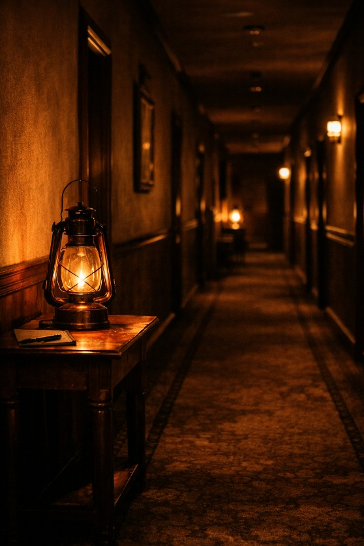
The phone rang nonstop — Room 5 couldn’t get through because the cordless handset was dead. John, the receptionist, looked overwhelmed, clutching the phone. Seidu, the security guard, had already lit a few kerosene lanterns, its glow flickering against the damp walls.
Esi didn’t call a meeting. There was no time. She made three calls in ninety seconds:
- Safety first: “Cleaner, fetch all the lanterns from storage. Put one every ten meters in the corridors and stairwell. People need to see.”
- Reassurance second: “Guard, walk to the gate and tell anyone outside we’re on it. Don’t let them think we’ve abandoned post.”
- Information third: She took the phone from the clerk and spoke directly to Room 4. “Sir, your room has a battery alarm. I’ll send someone to check in five minutes. If it fails, we’ll move you to a room with a working one.”
To the mother in Room 7: “We have ice in the kitchen. I’ll bring it myself.” She didn’t promise what she couldn’t deliver. She gave small, immediate actions guests could see happening.
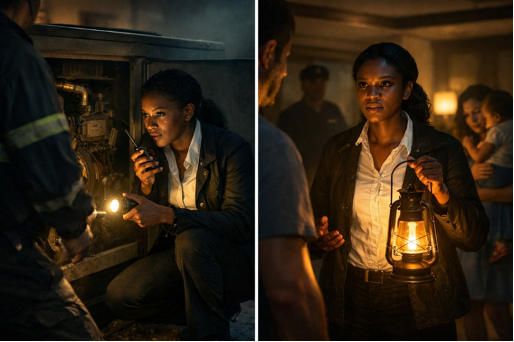
By 2:20 a.m., the corridors had light again. Guests stopped opening doors to shout. Panic lowered when they saw a person moving with purpose.
Then came the hard part. She crouched beside the stubborn generator with the clerk, hands greasy with diesel, learning the rhythm of machinery that refused to obey. Every five minutes, Room 4 knocked again. Room 2 wanted bottled water. The mother in Room 7 asked if the hospital was far if the fever worsened.
Esi had to decide what got her attention now, and what could wait. She told the clerk: “Tell Room 4 I’ll check his alarm in three minutes. Tell Room 2 water is coming. I’m with Room 7 first — a sick child comes before a missed flight.”
That was quick decision‑making under pressure: triage by urgency, not by who shouted loudest.
By 3 a.m., the generator coughed to life. The lights returned. Fans whirred back on. Guests retreated to rooms, some muttering “unprofessional,” others relieved and saying “thank you.”
Esi didn’t go to bed. She walked each corridor with a flashlight, checking rooms, looking for people who hadn’t come out. She thanked the cleaner for knowing exactly where the lanterns were. She told the clerk: “Tonight, presence mattered more than perfect answers. You stayed. That’s what guests remember.”
By dawn, she was exhausted but changed. The corridors smelled faintly of kerosene and diesel, but Parkens had shown her something deeper than systems.
Crises don’t wait for daylight. Leadership is 24/7, even at 2 a.m. Not all cries are equal. A sick child outranks a missed flight. Presence beats perfection. Guests trust action they can see, not silence. The dark reveals the team. Lanterns show who improvises, who follows, and who freezes.
She carried those lines like a creed, etched not in manuals but in the flicker of lamps and the hum of a reluctant generator. Even in a modest 7‑flat hotel, hospitality had a heartbeat — steady, human, and awake in the dark.
Closing Reflection
In the dim corridors of Parkens Hotel, the Resident Manager discovered that darkness is not only the absence of light but the presence of truth. Stress, self‑criticism, and the weight of unseen responsibilities pressed hard against her spirit, yet each shadow revealed a lesson no classroom had ever taught. To lead in hospitality is to walk through uncertainty with courage, to embrace imperfection as a teacher, and to find resilience in the very moments that feel most fragile. The Fourth Key reminds us that management is not merely about contracts or systems — it is about the human journey through doubt, discovery, and renewal. With a flashlight in hand, she learned that presence after the crisis mattered as much as solving it. In the dark, the Resident Manager saw more clearly, and in her clarity, the hotel itself found its light.
Disclaimer
The Fourth Key is a fictionalized narrative. It draws on real industry contexts but tells its story through imagined characters and scenarios. Any resemblance to actual people or events is coincidental. The purpose is to share operational insight through storytelling, not to critique individuals or institutions.