
Parkens Hotel markets itself as a budget property, but the management team had been working to shift it toward an experiential service model. The goal was simple: even when things go wrong, guests should leave with a story about how the staff handled it, not just a complaint about what broke.
That approach gets tested on mornings when two basics fail at once. On this day, the water pump was down and the plantain delivery was delayed. In a traditional setup, staff might focus on fixing the technical issues and hope guests did not notice. Under experiential management, the team’s job was different: keep guests reassured, involve them in the rhythm of the day, and create small moments that turned disruption into memory. Esi, the trainee manager, was determined to set the example.
5:45 a.m. — Room 5
Mr. Kwame twisted the tap. Silence. “Oh no,” he said, then sighed. A hot shower was his ritual before every meeting.
Before he could call reception, the clerk knocked with a bucket and towel from housekeeping. “Good morning, Mr. Kwame. We apologize for the problem with the water supply. I brought you a bucket of hot water for now. If you need more, just call extension 020.”
Kwame nodded slowly. “At least you came quickly.” He set the bucket inside and adjusted his morning.
Down the corridor, one of the older attendants muttered, “We shouldn’t be knocking on guests’ doors at dawn. Better to wait until they complain.”
Esi upon hearing this and replied quietly, “If we wait, they feel abandoned. If we act first, they feel cared for.”
6:20 a.m. — Kitchen
The cook eyed the empty crate. “No plantain. We should just tell them it’s finished.”
Esi shook her head. “Not ‘finished.’ Today we serve Sunrise Omelet with pawpaw and toast. Plantain will come later, fresh and hot when it does.”
She wrote it on the board herself, tied her apron, and cracked the eggs. Guests received plates with pawpaw and coffee while they waited.
The cook muttered, “Too much fuss. Guests just want food.”
But when one guest smiled and said, “Sunrise sounds better than shortage,” the trainees caught the lesson. Naming and framing can turn absence into experience.
6:50 a.m. — Lobby
Room 7, the honeymooners, came down early. They had booked specifically for the plantain and omelet.
Esi met them before they spoke, carrying a tray with steaming coffee and slices of fresh pawpaw. “Your Sunrise Omelet is on its way. For now, enjoy this by the window. When the plantain arrives, I’ll bring it myself.”
The waiter placed a hibiscus vase on their table. The couple smiled and settled in as if waiting was part of the plan.
Behind the desk, one of the older clerks whispered, “We’re wasting effort with flowers. Guests just want their food.”
Later that morning, the couple posted a photo online. The hibiscus vase was in the frame.
6:55 a.m. — Lobby
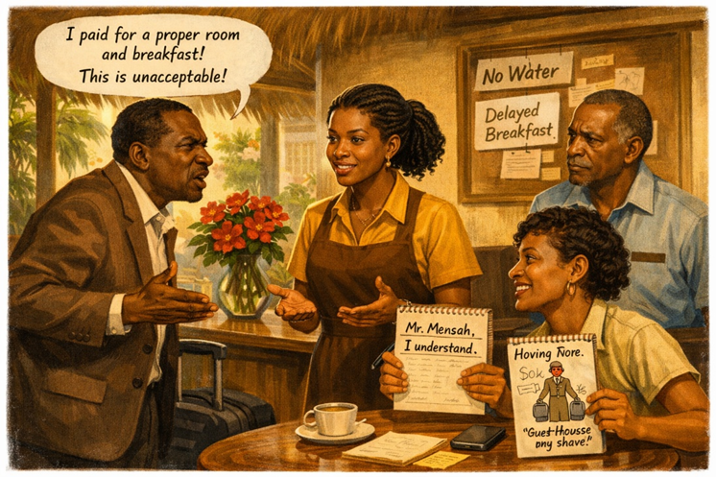
Mr. Mensah, a business traveler, strode to the desk with a frown.
“This is unacceptable. I paid for a room with running water and a proper breakfast. Don’t tell me about buckets and pawpaw. I want the service I booked.”
The older clerk lowered his voice. “We should just apologize and say nothing more.”
Esi stepped forward.
“Mr. Mensah, you’re right. This is not the morning we planned for you. Here is what we can do now. We will send warm water to your room immediately, and breakfast will be served without delay. The Sunrise Omelet will follow as soon as the plantain arrives. If this disrupts your schedule, we can arrange transport to a partner guesthouse for a shower before your meeting.”
Mr. Mensah paused. He still looked annoyed, but the options softened his tone. “Fine. Send the water now. And make sure the omelet comes when it should.”
The trainees noted the lesson. When guests protest, do not argue or over-explain. Offer clear alternatives quickly so they feel respected and in control.
7:30 a.m. — Housekeeping Hub
The housekeeping office became the hub. Buckets were filled there, and towels were folded neatly nearby. When guests called reception, delivery was quick and courteous.
One older attendant muttered, “Carrying buckets around makes us look weak.”
Esi shook her head. “No. They should see readiness, not excuses.”
By midday, guests were referring to it as ‘Parkens Morning Care’. The name carried dignity, and the shortage felt managed rather than hidden.
9:40 a.m. — Kitchen
The rider arrived with a sack of plantain. Esi fried the first batch in the open kitchen so guests could see and smell it. She carried Room 7’s plate herself.
“Sunrise Omelet, served late but hot,” she said.
The husband snapped a photo. “This is going online. Not because it’s perfect, but because you made us part of it.”
The cook folded his arms. “We used to hide delays. Now we parade them.”
Esi replied quietly, “We don’t parade them. We turn them into stories guests want to tell.”
11:45 a.m. — Reset
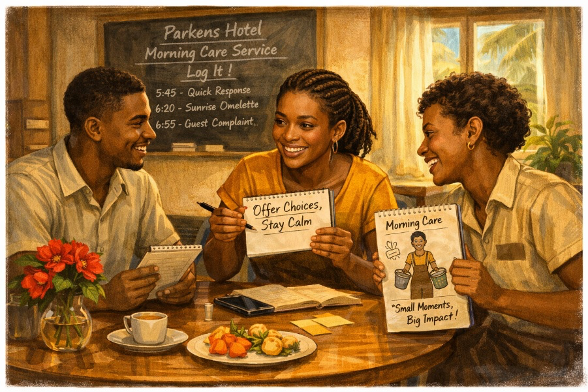
The plumber coaxed the pump back to life. Water flowed again. The full delivery arrived at noon. Parkens looked normal. But the shift had already happened.
That afternoon, Esi added one line to the staff handover book:
“When things break, act first, add a touch of care, and give guests one small moment to remember. Log it.”
By evening, the notebook carried three entries:
– Kwame’s thank you note: “Thanks for not pretending everything was fine.”
– A child’s drawing of the cleaner with buckets.
– Room 7’s review: “Breakfast was late, but the way they handled it made us feel like we mattered.”
Closing Reflections
- Action beats apology: The team moved before guests had to ask. That first knock with a bucket and a clear plan changed the tone of the morning.
- Language shapes perception: “Sunrise Omelet” and “Parkens Morning Care” reframed the problem. Guests stopped focusing on what was missing and started noticing what was being done.
- Presence builds trust: Esi’s choice to stay visible, explain the situation, and serve the first plate herself signaled ownership. Staff who watched learned that leadership is shown in motion, not in memos.
- Small touches create memory: A hibiscus vase, a handwritten note, a named service. None of these fixed the pump, but they gave guests something to remember and share.
- Protest needs options, not debate: When guests felt the service had failed, clear alternatives restored a sense of control. That is how complaints turn into cooperation.
Experiential management does not require a bigger budget. It requires intention. At Parkens, intention turned a difficult morning into a reference point for how the team wants to work.
Disclaimer
The Fourth Key is a fictionalized narrative. It draws on real industry contexts but tells its story through imagined characters and scenarios. Any resemblance to actual people or events is coincidental. The purpose is to share operational insight through storytelling, not to critique individuals or institutions.