
The Accra afternoon hung heavy and wet with harmattan haze. Halfway through the keynote, the generator coughed, sputtered, and died. Lights flickered out. Air conditioners fell silent.
A low murmur rippled through the conference room, then came the familiar chorus: “Ah, dumsor again!” Some delegates fanned themselves with programs, others chuckled and reached for their phones’ flashlights. The mood teetered between frustration and “this is Ghana for you.”
Esi felt the familiar spike of panic rise in her chest. Then she stopped it. Leadership isn’t about avoiding the blackout, she told herself. It’s about being the light that doesn’t go out. She moved.
From the storeroom came the line of rechargeable lanterns. Within minutes, staff placed them along the lobby, stairwells, and corridors. Their warm, steady glow replaced the sudden darkness without drama. Bottled water appeared in the conference room. Windows opened to let the breeze cut through the heat.
Esi called the technician, gave one clear instruction, then turned to face the room herself. “Ladies and gentlemen,” she said, voice level and unhurried, “we’ve had a brief power interruption. Our team is on it, and we’ll have you fully restored shortly. In the meantime, please stay comfortable.”
No excuses. No deflection. Just ownership. The room settled. Notebooks reopened. One delegate—a training consultant from Nairobi—caught her eye and smiled. “You remind me of Utalii’s best graduates,” he said. “Calm under pressure.”
Esi smiled back. “Maybe we learned in the same school of real service.” When the lights snapped back on ten minutes later, the applause wasn’t for the electricity. It was for the way she had held the moment together.
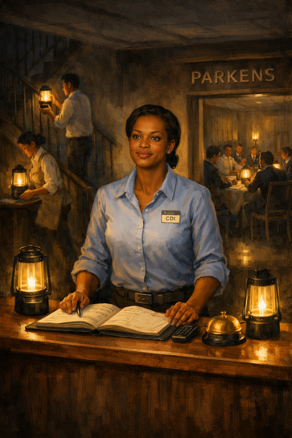
That evening, her mentor found her in the lobby, wiping down the last lantern before it went back to charge.
“You’ve found your voice,” he said quietly. “Not the loudest one in the room. The one that makes others breathe easier.”
Esi looked around. The marble floor was the same. The brass bell was the same. But the place felt different. Leadership had moved from what she knew to who she was becoming.
Closing Reflection
– Preparedness turns panic into calm. Rechargeable lanterns are small, but readiness is what guests feel first.
– Steadiness earns respect. Teams follow the person who steadies the room, not the one who raises their voice.
– Visibility builds trust. Guests remember the face that stood in the gap when the lights went out.
– The turning point is internal. Confidence stops being quoted from a manual and starts being lived in a moment.
Esi switched off the final lantern and felt the quiet click.
Tomorrow would bring new guests, new challenges, new tests.
But tonight, she knew—
The manager had finally emerged.
Disclaimer
The Fourth Key is a fictionalized narrative. It draws on real industry contexts but tells its story through imagined characters and scenarios. Any resemblance to actual people or events is coincidental. The purpose is to share operational insight through storytelling, not to critique individuals or institutions.